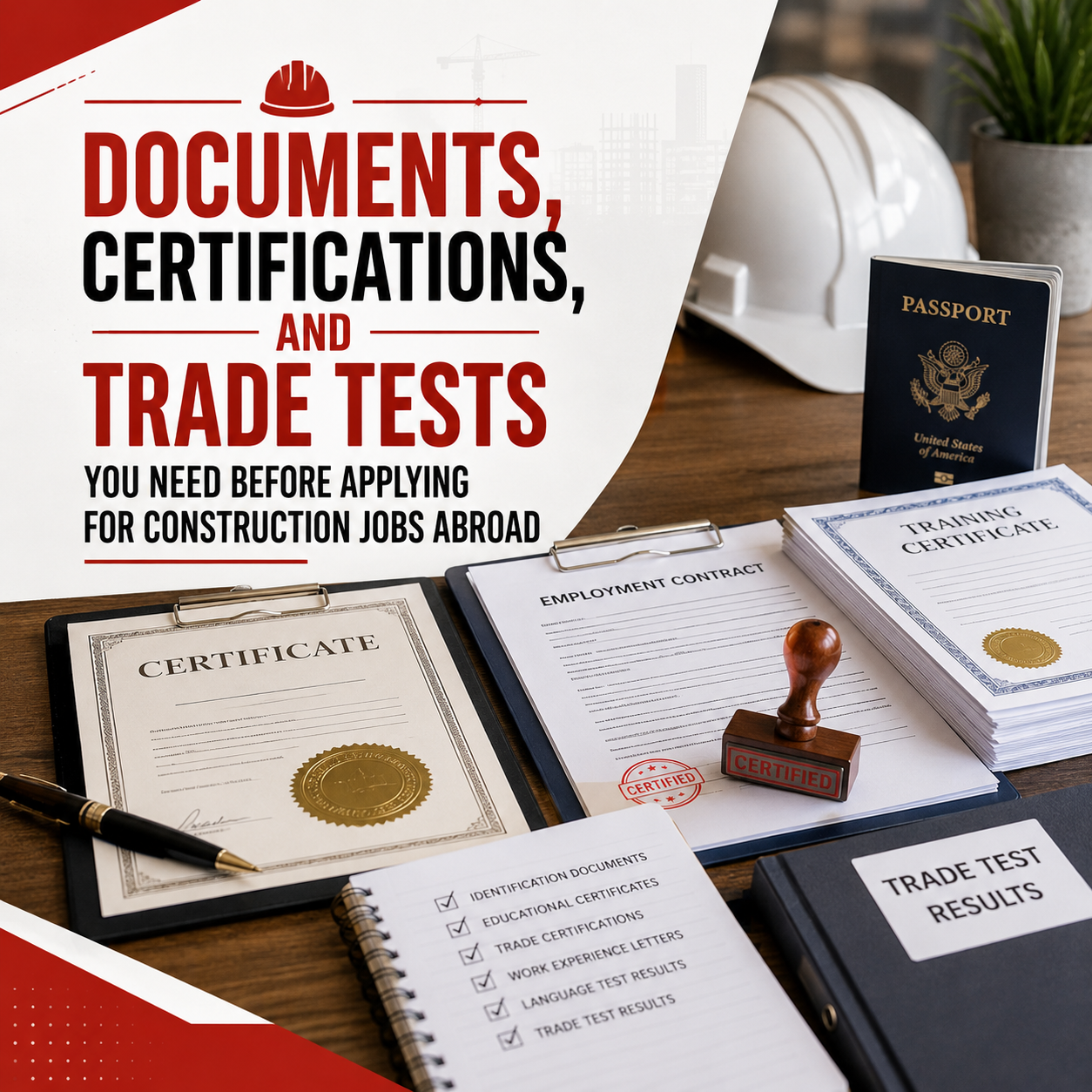
Most “jobs abroad” content lists visa routes and paperwork, but skips the part that actually determines whether you get hired: what employers are looking for when they review a candidate. Certifications get you through the door, but they’re rarely the whole story. This guide covers what separates a strong application from a weak one in construction trades abroad, masonry, welding, electrical, and carpentry specifically, though most of it applies broadly.
Certifications Open the Door, But They’re the Minimum, Not the Advantage
It’s worth being honest about this upfront: a trade certificate proves you’re eligible to be considered, not that you’ll be picked. In every country covered in this series, Canada, the UK, Australia, the US, employers sponsoring foreign workers are taking on real cost and risk (visa fees, legal processes, sometimes relocation support), so they’re not just checking a certification box. They’re trying to predict who will actually perform well and stay.
That means the things that differentiate candidates are usually specific, documented experience not general claims. “5 years bricklaying experience” is weak. “3 years on commercial high-rise projects, including structural blockwork and cavity wall construction” is strong, because it tells an employer exactly what you can do without them having to guess.
What Employers Look for in Each Trade
Masons/Bricklayers:
- Beyond basic technique, employers care about your experience with specific materials and project types, residential brick versus commercial blockwork versus stonework restoration are genuinely different skill sets. Speed and consistency matter too; being able to demonstrate a track record of hitting production targets without sacrificing quality is a real differentiator, especially on commercial projects with tight timelines.
Welders:
- This is the trade where certification specifics matter most. Employers want to know exactly which processes you’re certified in (MIG, TIG, stick/arc), which materials (steel, aluminum, stainless), and which positions (flat, vertical, overhead, pipe). A general “certified welder” claim is far weaker than “AWS D1.1 certified, structural steel, all-position.” If you’re pursuing this trade specifically, our dedicated welding guide goes deeper into which certifications matter most by country.
Electricians:
- Employers are especially attentive to whether your experience is residential, commercial, or industrial, since the skill sets and regulatory knowledge diverge significantly. Experience with specific systems, particularly renewable energy installation (solar, battery storage) or data center electrical work, is valuable given how fast those sectors are growing across all four countries right now.
Carpenters:
- The split between rough carpentry (framing, formwork) and finish carpentry (joinery, cabinetry, trim work) matters a lot to employers, since they’re often hiring for one specifically, not general “carpentry.” Being clear about which side of that split your experience sits on, and being honest if you’re weaker in one, helps employers place you correctly rather than assuming and being disappointed later.
Soft Factors That Matter More Than People Expect
Communication in the local language.
- Even in roles that are primarily hands-on, safety-critical trades require clear communication with supervisors and crews. Employers weigh this more heavily than many applicants assume, particularly for roles involving any degree of team coordination.
Reliability signals.
- Consistent employment history, without unexplained gaps, reads as lower-risk to an employer taking on the cost of sponsorship. If you do have gaps, a short, honest explanation in your application is far better than leaving it unaddressed.
Adaptability to local standards.
- Building codes, safety regulations, and even measurement systems (metric vs. imperial) differ across countries. Employers respond well to candidates who show they’ve already looked into these differences, rather than assuming their home-country methods will transfer directly.
Physical fitness and site-readiness.
- This sounds obvious, but construction work abroad is often more physically demanding than equivalent roles at home, due to project scale, weather conditions, and longer shift patterns on some large infrastructure projects. Employers do ask about this, directly or indirectly, and vague answers stand out.
How to Present Yourself Strongly
- Be specific in your CV and interview answers: Replace general claims (“experienced electrician”) with concrete detail (“4 years commercial electrical, including 2 years on solar installation projects”).
- Document your work with photos or project records where possible: A short portfolio, even informal, of completed work can meaningfully strengthen an application in trades like masonry, carpentry, and welding.
- Know the specific certification your target country requires, and be upfront in interviews about where you are in that process, whether you already hold it, are working toward it, or plan to pursue it after arrival through routes like the UK’s Experienced Worker CSCS pathway or Germany’s Recognition Partnership.
- Ask questions back: Employers sponsoring from abroad notice when a candidate asks informed questions about the project, site conditions, or team structure, it signals genuine engagement, not just interest in the visa.
Conclusion
Certifications and paperwork get you considered; specific, well-documented experience and clear communication about your actual skill set are what get you chosen. Employers sponsoring from abroad are managing real risk and cost, so the candidates who stand out are the ones who make it easy to trust exactly what they can do, not the ones with the longest generic skills list.
Related Reading
- Construction Jobs Abroad for Nigerians: Full List of In-Demand Roles
- Documents, Certifications, and Trade Tests You Need Before Applying for Construction Jobs Abroad
- Construction Jobs in Canada: How LMIA and TFWP Sponsorship Really Works
- Construction & Trade Jobs in the UK and Europe: Skilled Worker Visa Routes Explained