A strong trade background can still lose out to a weaker candidate who simply presents themselves better on paper and in the interview room. This isn’t unfair, employers sponsoring from abroad are managing real risk, and the CV and interview are the only tools they have to judge who’s actually ready. This guide covers how to build both properly, using the same principle that’s run through this whole series: specificity beats generic claims, every time.
Building a CV That Gets Read
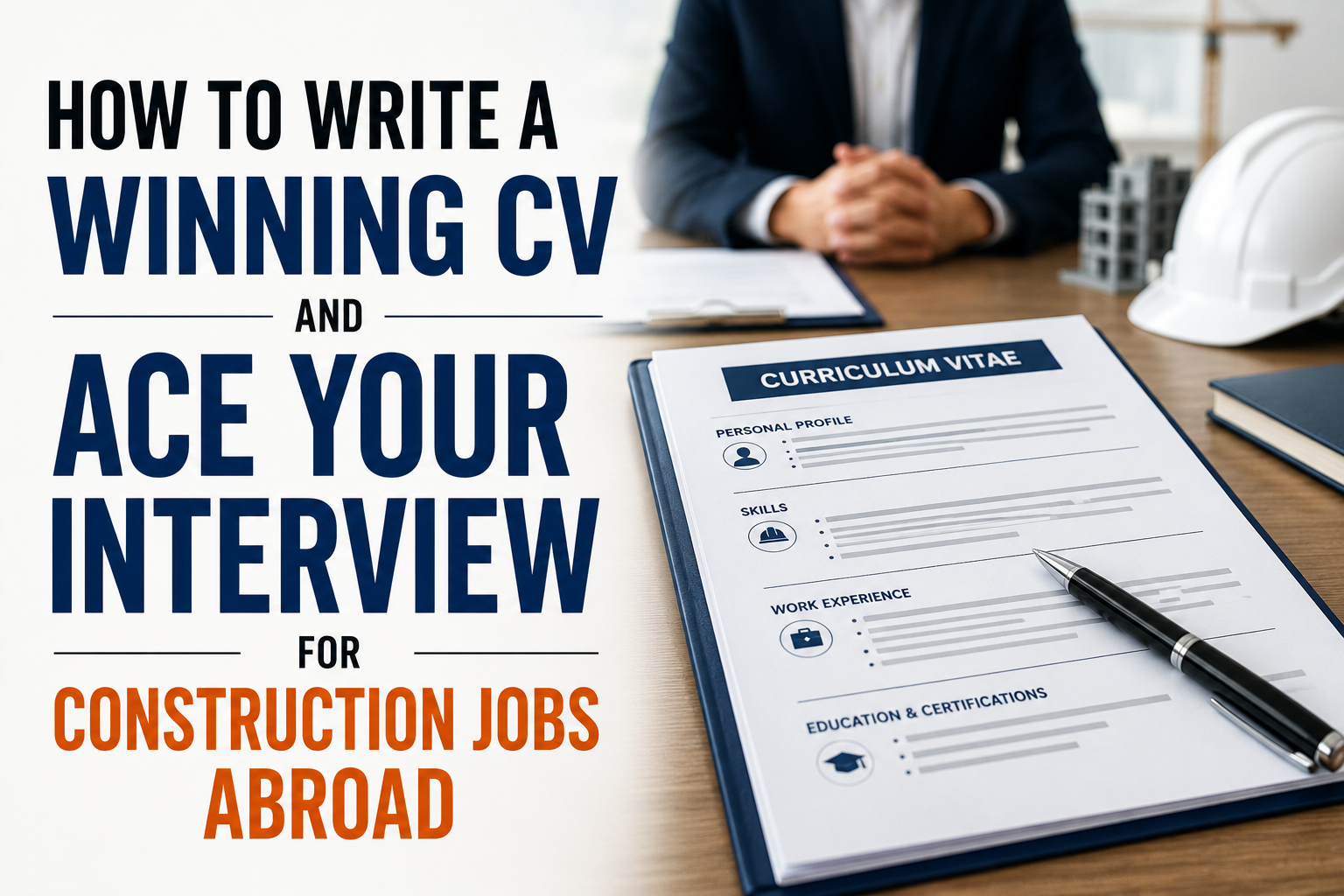
1. Lead with a focused summary, not a generic objective.
- Skip lines like “hardworking construction professional seeking opportunities abroad.” Instead, state exactly what you do and where you’re strongest: “Certified electrician, 6 years commercial and residential experience, including 2 years on solar installation projects.” This tells an employer in one line whether you’re worth reading further.
2. Replace vague duty descriptions with specific, measurable ones.
- Compare “responsible for electrical work on construction sites” with “installed and tested electrical systems on 15+ commercial builds, including full rewiring on 3 multi-story projects.” The second version is checkable and memorable; the first could describe almost anyone.
3. List certifications precisely, using the exact terminology your target country uses.
- If you’re targeting the UK, list your CSCS card color and NVQ level, not just “trade certified.” If you’re targeting welding roles, state the process, position, and material you’re certified in, this level of detail is exactly what we cover in the welding-specific guide, and it applies just as much to your CV as to interview answers.
4. Keep it to two pages, formatted cleanly.
- Recruiters reviewing applications from abroad are often moving through a high volume of CVs. Long blocks of text, inconsistent formatting, or unclear chronology work against you even if the underlying experience is strong.
5. Include a short, honest note about your current certification or visa status.
- If you’re mid-process on a qualification (working toward an NVQ, awaiting a German recognition decision), say so plainly rather than leaving a gap for the employer to guess at. Employers generally respond better to clear, honest positioning than to an application that looks polished but vague.
6. Use reference contacts who can actually be reached.
- A reference listed without a working phone number or email is close to useless to an employer verifying your history and confirm your references are reachable before listing them.
Common Interview Questions in Construction and How to Answer Them Well
“Walk me through your experience with [specific trade task].”
- This is a specificity test, not a general knowledge test. Don’t answer in the abstract, describe an actual project. “On my last commercial job, I handled the second-fix electrical work on a 40-unit residential build, including final testing and certification sign-off” beats a general description of what second-fix electrical work involves.
“Tell me about a time you identified a safety issue on site.”
- Employers ask this to gauge judgment, not just rule-following. A strong answer describes a specific situation, what you noticed, what you did about it, and the outcome, showing you took action rather than just reporting a problem and waiting.
“How do you handle disagreements with a supervisor or team member on site?”
- This is really a communication and professionalism question. Answer with a real example that shows you can raise a concern respectfully and work toward resolution, rather than either avoiding conflict entirely or escalating it unnecessarily.
“Why are you looking to work in [country] specifically?”
- Avoid answers that sound purely visa-motivated, even if that’s part of your honest reasoning. A stronger answer connects your trade goals to something specific about that country’s industry, for example, referencing the country’s construction demand or a particular type of project you want experience with. Employers are more comfortable sponsoring someone who shows genuine interest in the work itself, not just the destination.
“What would you do if you didn’t have the right tool or material on site?”
- This tests problem-solving and resourcefulness under real site conditions. A good answer shows practical judgment which is assessing whether a safe substitute exists, flagging the issue to a supervisor promptly, and not improvising in a way that compromises safety or quality.
“Do you have any questions for us?”
- Always have at least one or two ready, and make them specific, about the project you’d be working on, team structure, or what a typical week looks like. As covered in our guide on what employers actually want, asking informed questions signals genuine engagement with the role, not just interest in the visa outcome, and it’s one of the simplest ways to stand out.
A Few Practical Interview Tips
- Prepare for video interviews specifically, since many first-round interviews for overseas roles happen remotely. Test your connection, lighting, and background in advance, a poor setup can distract from a strong answer.
- Have your documents ready to reference or share including certification numbers, project photos, or a short portfolio, in case the interviewer asks to see evidence of the experience you’re describing.
- Practice saying your certifications and qualifications out loud, using the exact terms your target country expects. Fumbling over your own credentials in an interview undermines an otherwise strong CV.
- Be honest about what you don’t know. If asked about a system or regulation you’re not familiar with, a confident “I haven’t worked with that specific system, but here’s how I’d approach learning it” reads far better than guessing and getting it visibly wrong.
Conclusion
A strong CV and a strong interview both come down to the same thing: specific, checkable detail instead of generic claims. Describe real projects, use the exact certification language your target country expects, and answer interview questions with concrete examples rather than general statements about your skills. Combined with the right certifications and a properly verified sponsorship process, covered throughout the rest of this series, this is what turns a genuine tradesperson into a hired one.
Related Reading
- Skilled Trade Jobs Abroad: What Employers Actually Want
- Documents, Certifications, and Trade Tests You Need Before Applying for Construction Jobs Abroad
- Construction Jobs in Canada: How LMIA and TFWP Sponsorship Really Works
- How to Avoid Job Scams When Applying for Construction Work Abroad