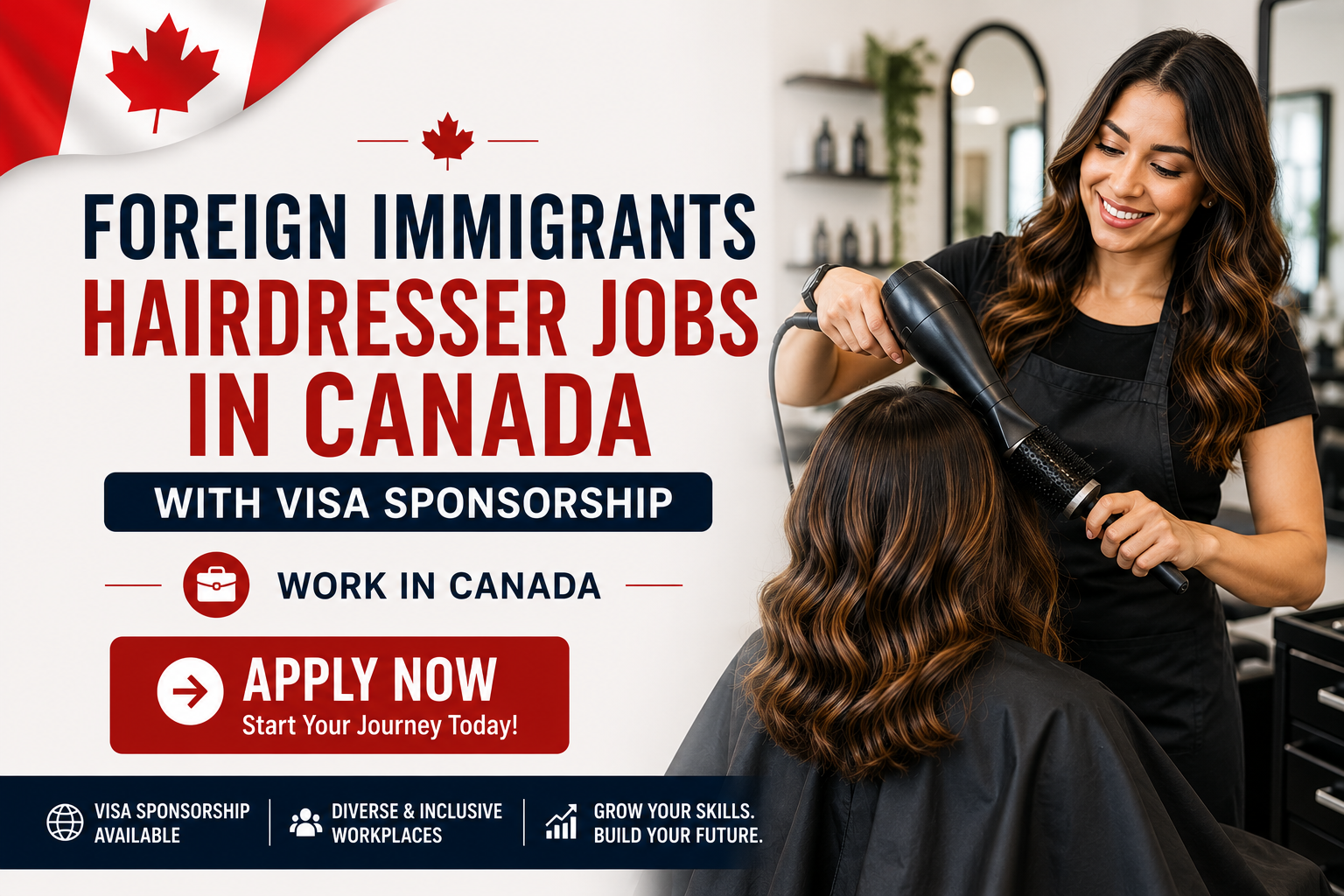
If you are a skilled hairdresser or hairstylist looking to build a new life abroad, Canada is one of the best countries to target in 2026. The demand for beauty professionals is growing steadily, job openings consistently outpace available local workers, and there are clear, legitimate pathways for foreigners to get in with visa sponsorship. This article tells you everything you need including what the job involves, how much you will earn, how to get sponsored, and exactly how to apply.
Why Canada Needs Foreign Hairdressers
Canada’s beauty industry is booming. The demand for hairstylists in Canada has made foreigners immigrate as fashion designers. More importantly, immigrating as a hairstylist helps fill genuine Canadian job market demands.
- Over the period 2022 to 2031, new job openings for hairstylists and barbers are expected to total 42,500, while only 35,200 new local job seekers are expected to be available to fill them.
- Canada’s beauty industry revenue projections exceed CAD $11 billion, making it one of the most active hiring sectors for immigrants.
- Hairdressers are in demand across all provinces from Ontario and British Columbia to smaller provinces that offer even easier pathways to permanent residency
How Much Do Hairdressers Earn in Canada?
The average hairdresser gross salary in Canada is $41,654 per year, or an equivalent hourly rate of $20. Entry-level hairdressers with 1 to 3 years of experience earn an average of $34,507, while senior hairdressers with 8 or more years earn an average of $49,664.
| Role | Hourly Rate (CAD) | Annual Salary (CAD) |
| Junior / Apprentice Hairdresser | $15 – $18/hr | $28,000 – $35,000 |
| Hairdresser (1–3 years exp) | $18 – $22/hr | $34,000 – $43,000 |
| Senior Hairdresser (5+ years) | $22 – $28/hr | $45,000 – $55,000+ |
| Salon Manager / Team Lead | $25 – $35/hr | $50,000 – $68,000 |
How Visa Sponsorship Works for Hairdressers
There are three main immigration routes for foreign hairdressers to work in Canada:
Route 1: Temporary Foreign Worker Program (TFWP) with LMIA
This is the most direct route for employer sponsorship.
- A Canadian salon or employer applies for a Labour Market Impact Assessment (LMIA), a document proving no qualified Canadian worker was available for the role
- Once the LMIA is approved, you receive a job offer letter and apply for a work permit
- The Temporary Foreign Worker Program helps facilitate visa approval for eligible candidates who have a job offer and approved LMIA from a Canadian employer.
- This is the route most hairdressers use when they already have a specific employer ready to hire them.
TFWP (Official Government of Canada Page)
Route 2: Express Entry (Federal Skilled Trades Programme)
Express Entry is Canada’s points-based immigration system. Hairdressers under NOC 63210 may qualify for the Federal Skilled Trades Programme (FSTP) within Express Entry. To qualify, you generally need:
- At least 2 years of full-time work experience in hairdressing in the last 5 years
- A valid job offer in Canada, or a certificate of qualification in hairstyling from a Canadian province
- Meet language requirements (CLB Level 4 for speaking and listening, CLB Level 5 for reading and writing)
Express Entry (Official IRCC Page)
Route 3: Provincial Nominee Program (PNP)
Many provinces actively nominate skilled hairdressers to come and work in their region.
- Provinces like New Brunswick, Nova Scotia, Prince Edward Island, Manitoba, and Saskatchewan have strong demand for hairstylists and actively use PNP streams to bring them in
- You can immigrate to Canada as a hairstylist or hairdresser using a Provincial Nominee Program, whereby you live and work in a particular province. All provinces in Canada have their own qualifications for immigrants coming for employment.
- A provincial nomination gives you 600 additional CRS points in Express Entry, virtually guaranteeing an Invitation to Apply (ITA) for permanent residence
Provincial Nominee Programs (Official Page)
Requirements to Work as a Hairdresser in Canada
Education and Training:
- This occupation usually requires a college diploma, an apprenticeship training of less than 2 years, or more than 6 months of on-the-job training.
- Completion of a two- or three-year hairstyling apprenticeship programme or a college programme in hairstyling combined with on-the-job training is the standard route
Licensing (varies by province):
- In New Brunswick, licensing by the Cosmetology Association of New Brunswick is mandatory to use the title “hairstylist” or “hairdresser.”
- Ontario requires a provincial hairstyling licence
- British Columbia, Alberta, and Quebec each have their own cosmetology licensing boards
Work Experience:
- Most employers and immigration programmes require at least 1 to 2 years of professional hairdressing experience
- Your experience must be verifiable, employment letters, pay stubs, or references from previous salons
Language:
- Proficiency in English or French is required
- Accepted tests include IELTS, TOEFL, CELPIP (English) or TEF, TCF (French)
- Most hairdresser roles require conversational fluency at minimum
Character and Health:
- Clean police clearance certificate
- Medical examination if required by your visa type
Your NOC Code:
Your official occupation code in Canada is:
NOC 63210: Hairstylists and Barbers (TEER 3). You will need this code when applying for jobs and when submitting your immigration application. It determines which programmes you qualify for.
Benefits of This Career in Canada
- Strong job security, competitive pay, a supportive work environment, a direct pathway to Canadian permanent residence, and access to free healthcare
- Tips and commissions significantly boost your income
- Flexible hours including full-time, part-time, and self-employment options available
- Your skills are internationally transferable
- Clear pathway from work permit to permanent residency to citizenship
How to Apply
Step 1: Find a Job and Secure a Job Offer
- Search the platforms above and apply directly for roles in your target province.
Step 2: Employer Applies for LMIA
- Once an employer selects you, they apply for an LMIA through Employment and Social Development Canada (ESDC). This confirms no Canadian worker was available for your role. Processing typically takes 2 to 5 months.
Step 3: Apply for Your Work Permit
Once the LMIA is approved, you apply for a Temporary Work Permit through IRCC’s online portal. You will need:
- The positive LMIA document from your employer
- Your job offer letterValid passport
- Language test results
- Educational and professional certificates
- Police clearance certificate
Apply for a Work Permit (Official IRCC)
Step 4: Get Your Credentials Recognised
Some provinces require foreign-trained hairdressers to have their credentials assessed and recognised before they can legally work.
- Contact your destination province’s cosmetology or trades board
- Red Seal Programme, Canada’s national credential recognition system for hairstylists. Getting your Red Seal endorsement allows you to work in any Canadian province without additional licensing exams
Red Seal Programme (Official Page)
Step 5: Arrive in Canada and Begin Working
- Once your work permit is approved, travel to Canada and start your job. Begin building your Canadian work experience. This qualifies you for permanent residency later.
Step 6: Apply for Permanent Residence
After 12 months of full-time work experience as a hairstylist in Canada, you may qualify for:
- Canadian Experience Class (CEC) under Express Entry
- Provincial Nominee Program (PNP) in your province
Canadian Experience Class (Official Page)
Tips to Get Hired Faster
- Build a strong portfolio: Photos of your best work are essential in this industry. Create an Instagram or portfolio website showcasing your skills
- Target smaller cities and rural provinces: New Brunswick, Nova Scotia, and Manitoba have faster LMIA approvals and less competition than Toronto or Vancouver
- Get Red Seal certified: It shows Canadian employers that your skills have been nationally validated and removes licensing barriers across provinces
- Apply to multiple provinces at once: Do not limit yourself to one location
- Contact salons directly: Many small and medium-sized salons sponsor international workers without advertising publicly. Call or email them directly and ask
- Learn both English and French: Being bilingual opens up Quebec, where there is very strong demand for trained hairdressers and a dedicated immigration stream
Conclusion
Canada’s hairdressing industry has more job openings than local workers to fill them and the immigration system is specifically designed to welcome skilled foreign professionals into that gap. Start today, confirm your NOC code is 63210 and begin your Express Entry profile, search Job Bank for LMIA-approved hairstylist openings near your target province, contact salons in smaller provinces directly, start your Red Seal credential assessment to remove licensing barriers, and prepare your portfolio and update your resume in Canadian format